
AI model releases and dev tooling shifts #38

Today's Letter
- Microsoft reveals MAI coding and reasoning models
- Anthropic details Claude containment patterns across products
- Cloudflare, VoidZero team joins
Microsoft reveals MAI coding and reasoning models

- Microsoft introduced MAI-Code-1-Flash at Build 2026 as its first coding model for generating application and website code from text prompts.
- The company also introduced MAI-Thinking-1, a medium-sized reasoning model positioned around high efficiency and lower token cost.
- MAI-Code-1-Flash is available through GitHub Copilot and the Visual Studio Code editor.
- MAI-Thinking-1 is in private preview through Microsoft Foundry, where customers can register interest before broader release.
- Microsoft said customers can improve MAI-Thinking-1 accuracy by adding their own data to application workflows.
- The launch expands Microsoft's proprietary model lineup as it tries to reduce dependence on OpenAI and lower developer serving costs on Azure.
- Microsoft AI CEO Mustafa Suleyman said a McKinsey-tuned version outperformed OpenAI GPT 5-5 with 10 times better cost efficiency.
Source: cnbc.com
More: blogs.microsoft.com · news.microsoft.com · tradingkey.com
Anthropic details Claude containment patterns across products
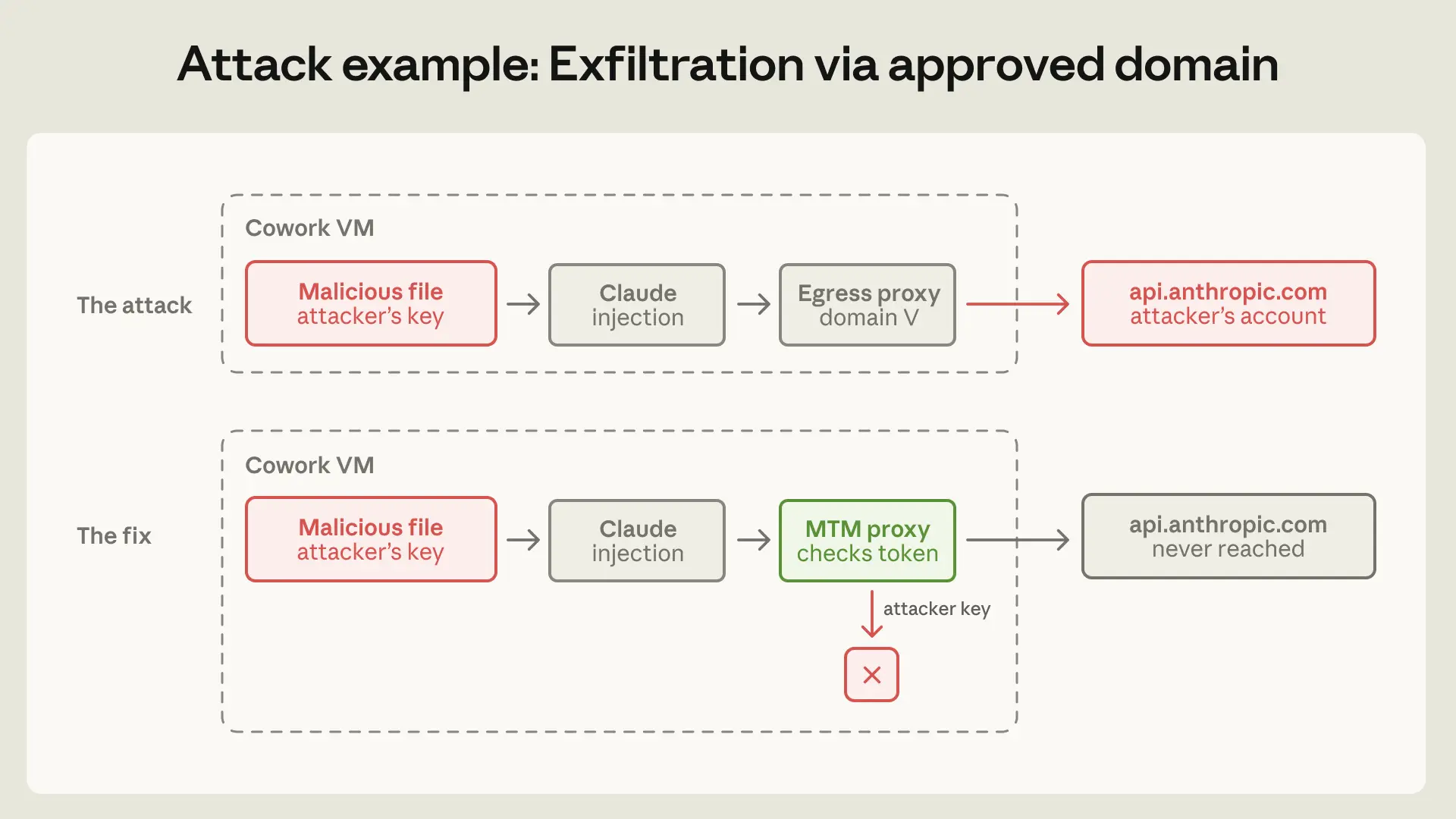
- Anthropic published an engineering post on May 25, 2026 outlining how it contains Claude across claude.ai, Claude Code, and Claude Cowork as agent access expands
- The post frames agent risk around three categories: user misuse, model misbehavior, and external attackers, with defenses split across the runtime environment, the model layer, and external content sources
- Anthropic says Claude Code previously relied on per-action approvals, but telemetry showed users approved about 93% of permission prompts, which reduced the effectiveness of human-in-the-loop review over time
- The company says Claude Opus 4.7 held prompt-injection attack success to about 0.1% on single attempts and roughly 5-6% after 100 adaptive attempts on Gray Swan's Agent Red Teaming benchmark
- Anthropic also says Claude Code auto mode catches about 83% of overeager behaviors before execution, but argues model-layer defenses cannot be treated as sufficient on their own
- For claude.ai code execution, Anthropic describes an ephemeral gVisor container design on isolated infrastructure, with server-side execution and a per-session filesystem to limit blast radius
- The article argues tighter containment allows more unattended agent operation, while granular tool and data permissions remain necessary for connectors, plugins, MCP servers, and web search inputs
Source: anthropic.com
More: github.com · quillette.com
Cloudflare, VoidZero team joins

- Cloudflare said VoidZero and its full team are joining the company as of June 4, 2026.
- Vite, Vitest, Rolldown, Oxc, and Vite+ remain open source, vendor-neutral, and community-driven.
- Vite stays under the MIT license, and apps built with it are intended to remain portable across hosts.
- Evan You and the existing VoidZero team continue leading Vite, Vitest, Rolldown, Oxc, and Vite+.
- Cloudflare committed $1 million to a Vite ecosystem fund for maintainers and contributors, administered by the Vite core team.
- The two sides had already worked together since 2024 on Vite's Environment API and Cloudflare's Vite plugin.
- Cloudflare said `vite dev` with its plugin runs server code in workerd, matching the Workers production runtime for local development.
- Cloudflare cited roughly 129M weekly Vite downloads and almost 14M weekly downloads for `@cloudflare/vite-plugin`.
Source: blog.cloudflare.com
Jocoletter curates AI, software, and product trends for developers and builders.
#Anthropic #Cloudflare #Microsoft