
Copilot, Gemini, and Vercel Updates #65

Today's Letter
- GitHub Copilot adds Claude Sonnet 5 GA
- Google, Nano Banana 2 Lite and Gemini Omni Flash introduced
- Vercel adds Dockerfile deployments on Fluid Compute
GitHub Copilot adds Claude Sonnet 5 GA
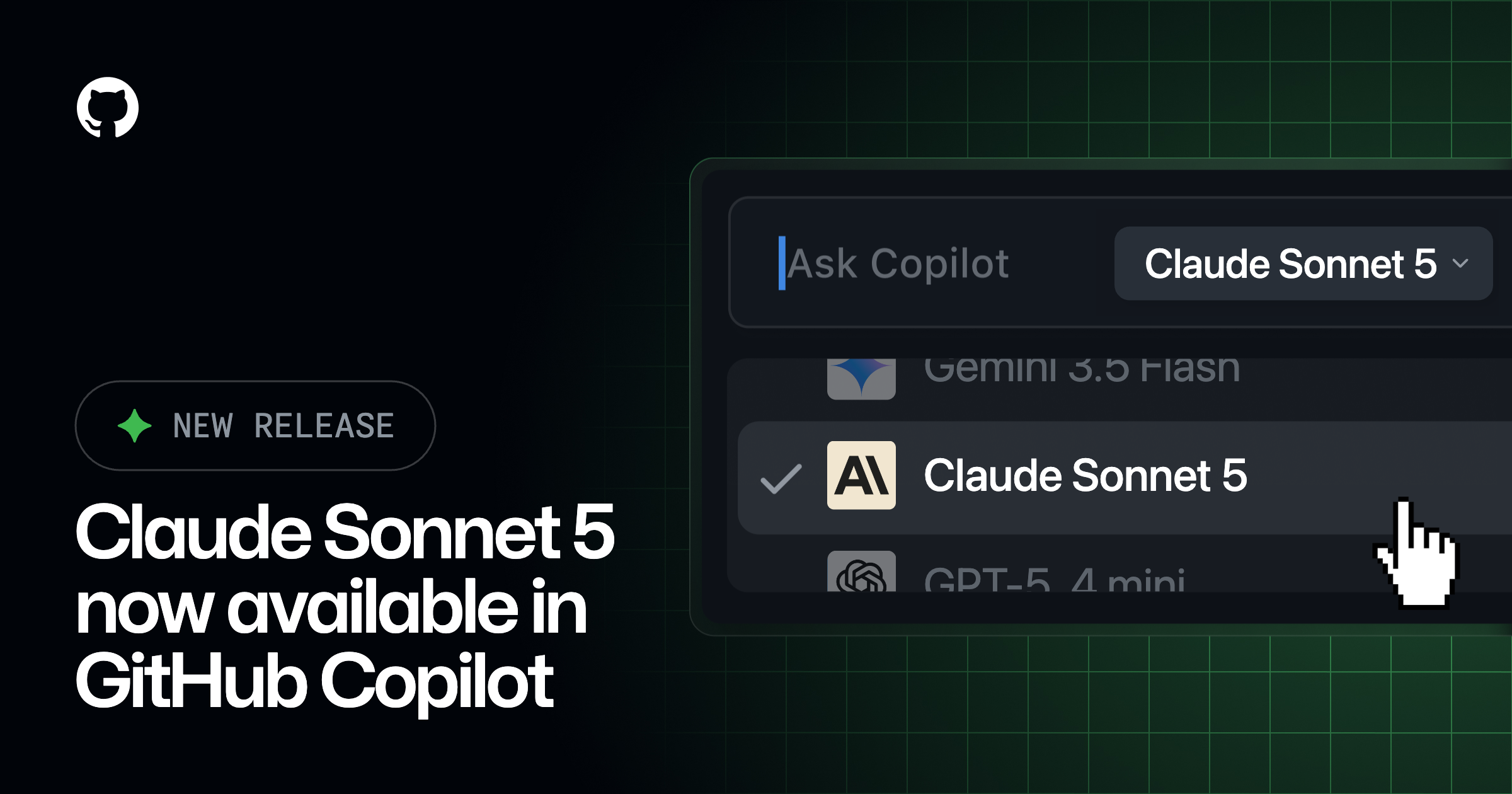
- GitHub made Anthropic's Claude Sonnet 5 generally available in GitHub Copilot on 2026-06-30.
- The model is positioned for everyday coding tasks across the IDE, CLI, and agentic workflows.
- GitHub said internal testing showed strong coding results, especially on CLI-style tasks.
- GitHub also cited strong prompt-cache utilization and competitive latency at lower effort levels.
- Access is rolling out to Copilot Pro, Pro+, Max, Business, and Enterprise plans.
- Model selection is available in Visual Studio Code, Visual Studio, JetBrains, Xcode, Eclipse, and github.com.
- The rollout also covers Copilot CLI, GitHub Copilot cloud agent, Copilot App, and GitHub Mobile on iOS and Android.
- Business and Enterprise admins can enable the model through Copilot model policy settings.
- Claude Sonnet 5 uses Zero Data Retention in Copilot and is billed at provider list pricing under Usage Based Billing.
Source: github.blog
Google, Nano Banana 2 Lite and Gemini Omni Flash introduced

- Google published an official post on June 30, 2026 announcing Nano Banana 2 Lite and Gemini Omni Flash for developers.
- The announcement frames both releases as builder-facing model updates rather than a consumer product launch.
- Nano Banana 2 Lite is presented as a lighter variant in the Nano Banana line.
- Gemini Omni Flash is introduced alongside the update, indicating a paired multimodal rollout in the Gemini model stack.
- The source materials also reference Gemini Image, suggesting image-generation or image-related workflow relevance within the same release context.
- Google and Google DeepMind are the primary entities attached to the announcement.
- No pricing, quota, or regional availability details are provided in the supplied source extract.
Source: blog.google
More: techcrunch.com · news.hada.io · gigazine.net
Vercel adds Dockerfile deployments on Fluid Compute

- Vercel introduced support for deploying any HTTP server from a `Dockerfile.vercel`, with build, image storage, rollout, and autoscaling handled on Fluid Compute.
- The setup requires the service to listen on `$PORT`, which defaults to `80`; Vercel's example uses a two-stage Go build with `golang:1.24-alpine` and `alpine:3.20`.
- Deployments run through the Vercel CLI, and each Git push rebuilds the image and creates a fresh preview URL; manual deploys without a commit are also supported.
- Containers run as first-class workloads alongside frontend apps and other services on the same platform, with private networking, shared domains, and built-in logs, traces, and metrics.
- Vercel says images are stored as optimized boot images that can be streamed and decompressed on demand, so request handling can begin before the full image download completes.
- Compute billing follows Fluid Compute's active CPU model, so charges apply to execution time rather than wall-clock idle time.
- The current model is stateless between requests, with persistent state expected to live in external services such as databases or caches from Vercel Marketplace; durable storage for containers is still in development.
Source: vercel.com
Jocoletter curates AI, software, and product trends for developers and builders.
#GitHub #Google #Vercel